
11th Future Technologies Conference 2026
15-16 October 2026 in Berlin, Germany
About the Future Technologies Conference
Converging AI, Quantum, Robotics, Cybersecurity, and Beyond
The Future Technologies Conference (FTC) has run annually since 2016, now marking its 11th edition, bringing together researchers, academics, and industry innovators to examine the technologies shaping the coming decade - from artificial intelligence and quantum computing to robotics, cybersecurity, and immersive systems.
The conference provides a rigorous platform for peer-reviewed research, interdisciplinary exchange, and translating emerging ideas into practical impact through keynotes, technical sessions, and interactive discussions across academic and industrial domains.
A decade in, FTC continues to shape the discourse on future technologies grounded in evidence, relevance, and societal need

Conference Tracks
Choose the track that fits your research when you submit. Topic lists are indicative, and work across the field is welcome.
Machine Learning
- Deep Learning
- Agentic AI & Multi-Agent Systems
- Generative AI
- Explainable AI
- Large Language Models (LLMs)
- Computer Vision
- Reinforcement Learning
- Applied AI
- AI in Healthcare
- AI for Climate and Sustainability
Human-Computer Interaction
- VR, AR, MR & XR
- Multimodal Interfaces
- Wearable Computing
- Brain Computer Interfaces
- Human-AI Co-Creativity
- Inclusive Design
- Context-Aware Computing
- Spatial Computing
- Voice & Conversational Interfaces
- Haptic & Physiological Interfaces
Data Science
- Data Mining
- Predictive Modeling
- Data Analytics
- Data Fusion
- Sentiment Analysis
- Natural Language Processing
- Information Retrieval
- Big Data
- Speech Technologies
- AI Augmented Data Science
Cyber-Physical Systems
- Smart Cities
- Smart Grids and Energy Networks
- Sensing and Sensor Networks
- Ambient Assisted Living
- Digital Twins
- Intelligent Transportation
- Smart Manufacturing
- Internet of Things (IoT)
- Autonomous Systems
- Geographic Information Systems
Future Computing Architectures
- Quantum Computing
- Neuromorphic Systems
- High Performance Computing
- Human-Centered Computing
- Cloud Computing
- Edge and Fog Computing
- GPU Programming
- Distributed Computing
- Cognitive Systems
- Complex and Adaptive Systems
Robotics
- Human Robot Interaction
- Cognitive Robotics
- Robotic Prosthetics
- Swarm Intelligence
- Real-Time Learning
- Self-Constructing Systems
- Bio-Inspired Robotics
- Continual Learning in Robotics
- Neuro-Robotic Interfaces
- Industry 5.0
Cybersecurity
- Cybersecurity Frameworks
- Threat Intelligence
- Cryptography
- Quantum-Resistant Security
- Internet and Cloud Security
- Digital Identity and Biometrics
- Trusted Architectures
- Privacy-Preserving AI
- Blockchain
- Ethical AI
Education Technology
- AI in Education
- e-Learning Tools
- Gamified Learning
- Virtual Learning Ecosystems
- Social Learning Technologies
- Curriculum Design
- Learning Analytics
- Personalized Learning
- Accessibility and Inclusivity
- Delivery Systems and Environments
Your research, published and indexed
Accepted papers appear in peer-reviewed conference proceedings.

The proceedings will be published by Springer in the "Lecture Notes in Networks and Systems" series. These proceedings will also be submitted for indexing in major databases, including Web of Science, SCOPUS, INSPEC, WTI Frankfurt eG, zbMATH, and SCImago.
(*) Papers from the late-breaking round will be published as a separate proceedings volume after the conference.
-

-

-

- WTI Frankfurt eG
-

-

Keynote talks
Invited talks from leading researchers and practitioners in the field.
Paper sessions
Oral and poster presentations of peer-reviewed work.
Awards
Outstanding papers and posters are recognised at the closing of the conference.
Networking
Meet researchers and industry experts from 60+ countries.
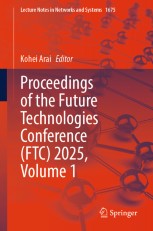
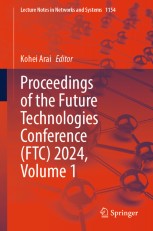
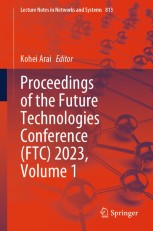
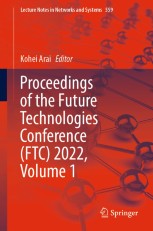
Proceedings
Papers from past editions are published in proceedings by Springer. Choose a year to open its volumes on the publisher's website.
Earlier proceedings (4 years)

Previous Editions
Explore past editions of Future Technologies Conference.
Co-located Events
Held alongside 11th Future Technologies Conference 2026, sharing its dates, venue and proceedings.
Past attendees include researchers from leading universities
Past Speakers
A selection of past keynote talks from Future Technologies Conference.


Frequently Asked Questions
See the Call for Papers page for tracks, deadlines, formatting templates and submission instructions.
Prepare your paper with the conference Word or LaTeX template. Page limits, abstract length and figure and reference rules are in the formatting guidelines on the Call for Papers page.
Every submission is double-blind peer reviewed by the Technical Programme Committee, judged on originality, technical depth, impact and clarity. Read the full review process and criteria.
Generative AI may support drafting and language editing, but its use must be declared in the manuscript, it cannot be listed as an author, and authors stay fully accountable for the content. See the full AI policy.
Yes - registered, presenting authors can request an invitation/visa support letter. Contact us via the Contact page once registered.
Registration Categories
- Author: Authors are those presenting a paper at the conference. Each author registration allows presentation of one paper only, and includes access to keynotes, paper sessions, and all conference activities.
- Participant: Participants are attendees who do not submit or present a paper but wish to attend presentations, keynotes, and sessions.
Payment Information
- Registration fees must be paid in advance. We accept most major international credit and debit cards.
- Payments can also be made via bank transfer. If you wish to pay by bank transfer, please contact us at [email protected] to request an invoice with the necessary payment details.
Registration Policy
- Each registration is valid for one delegate only.
- Each author registration permits the presentation of one paper.
- All registrations are final and non-refundable.
- Registrations are non-transferable to another delegate.
What People Say
“What an exciting and intellectually stimulating day at the Future Technologies Conference (FTC) 2026 in Berlin! A particular highlight for me was the fantastic keynote. I also enjoyed the discussions on smart healthcare and the challenges of robotics and automation, as well as the fascinating conversations over coffee and the thoughtful questions after my presentation. It is always rewarding to discover unexpected connections between different fields of research. A day full of ideas, curiosity and inspiring exchanges!”
“It was actually great and completely different from what I expected—I thought it might be a bit like white noise, where you’d fall asleep or end up on your phone, but it was genuinely interesting and engaging because the speakers came with very challenging subjects. They really challenged you to think about them. I felt there was so much there that I could take away. I know I was always asking questions at the end, but that’s precisely because it was actually interesting. The talks constantly stimulated my thinking and made me think, “Okay, I hadn’t seen it that way before.””
“Beyond presenting my research and hearing great keynotes, I was impressed by how intentionally the organizers created chances to connect: small tasks, smart questions, simple prompts that sparked real conversations, and feel at home in a room full of new people. It turned the conference into something rare: engaging, energizing, and genuinely community-building.”
“For me, it was super cool that there was a short track on digital health, which, of course, I enjoyed very much. But it was also a great experience to take a step back and get a broader view of what’s going on in AI and in completely different industries. AI is such an amazing and rapidly growing field that there’s always a danger of getting stuck in your own area of digital health, like in my case. So, it was really good to take inspiration from other areas and industries, including security and all of that.”
“It was rewarding to see the talk spark engaged questions and thoughtful discussion. The keynotes and many of the paper sessions were excellent — with AI unsurprisingly front and centre. I came away with a much clearer sense of where work on neural networks and deep learning is heading. Equally valuable were the conversations in between sessions, connecting with people from both academia and industry.”
“I can confidently say that these events have always been a great source of knowledge and inspiration. I would like to thank the organisers for consistently delivering such top‑notch conferences that bring together brilliant minds and foster meaningful discussions. I look forward to continuing the conversations sparked during the event and to seeing how the ideas we explored will grow in the months ahead.”
“A special thank you to SAI Conferences for an inspiring and highly engaging event, and to all colleagues who joined the session, asked thoughtful questions, and exchanged ideas on the future of digital transformation in higher education.”
Photos from 2025
Explore Other SAI Conferences
Part of the SAI Conferences portfolio, spanning computing, AI, and emerging technologies.